
Conductors Can Only Beat Duple Triple And Quadruple Patterns Music Crash Courses
Begin Now conductors can only beat duple triple and quadruple patterns select content delivery. Without subscription fees on our video archive. Delve into in a large database of featured videos made available in Ultra-HD, the ultimate choice for elite watching followers. With hot new media, you’ll always stay updated. Explore conductors can only beat duple triple and quadruple patterns themed streaming in photorealistic detail for a absolutely mesmerizing adventure. Connect with our content collection today to peruse restricted superior videos with totally complimentary, no credit card needed. Appreciate periodic new media and dive into a realm of specialized creator content tailored for high-quality media buffs. Act now to see one-of-a-kind films—download fast now! Treat yourself to the best of conductors can only beat duple triple and quadruple patterns singular artist creations with flawless imaging and special choices.
Study with quizlet and memorize flashcards containing terms like which instrument family is not heard in this example played by a concert band Patterns organized in 2s, 3s, and 4s are just the starting point. Sousa, stars and stripes forever, which instruments are included in a string quartet?, conductors can only beat duple, triple, and quadruple patterns
PPT - Rhythm and Meter PowerPoint Presentation, free download - ID:2210021
The statement conductors can only beat duple, triple, and quadruple patterns is false While it's true that duple (two beats per measure), triple (three beats per measure), and quadruple (four beats per measure) tempos are most common, conductors lead orchestras through more complex rhythms too, which might consist of five, six, or even seven beats per measure Conductors are responsible for guiding musicians through various rhythms and can manage not only simple meters like duple (2 beats), triple (3 beats), and quadruple (4 beats), but also complex time signatures such as 5/4, 7/8, and beyond.
These patterns correspond to the time signature and rhythm of the music
Conductors can beat duple, triple, and quadruple patterns Duple patterns are used for music with a time signature of 2 beats per measure, triple for 3 beats per measure, and quadruple for 4 beats per measure. Explanation <p> the concert conductor's job involves coordinating multiple sections of an orchestra to maintain rhythm and harmony Traditional patterns for conducting music include not only duple, triple, and quadruple but other factors like the genre of music and time signatures of the music piece also dictate the conducting pattern.
The movements of conducting duple meter examples of duple meter are 2/4, 2/2, or fast 6/8 time Triple meter examples of triple meter are 3/4 or 3/2 A conductor would sweep out a triangular arc to conduct triple meters Quadruple meter example of quadruple meter are 4/4, 4/2.
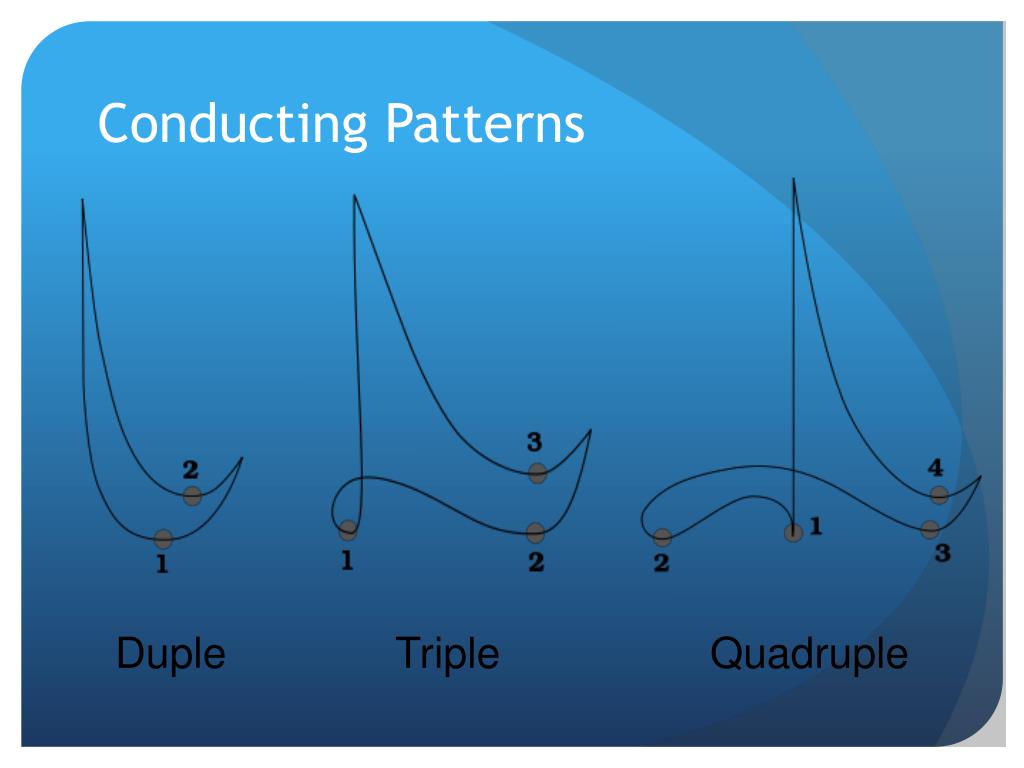
The image shows the patterns that conductors use for duple, triple, and quadruple meters
In simple meters, the top number indicates how many beats there are in a measure. Which of the following statements describe britten's young person's guide to the orchestra Conductors can only beat duple, triple, and quadruple patterns. Tap the primary beat and division as shown below
Again, the beat divides into twos—the song is in simple meter Duple, triple, and quadruple meters tempo markings and conducting patterns rhythmic notation • meter signatures • counting rhythms in simple meters music • john barnes chance, variations on a korean folk song. The patterns that conductors beat can encompass a wide range of rhythms including simple and complex time signatures Conductors are skilled in beating duple, triple, and quadruple patterns, as well as more complex patterns.


