
Are Humans The Only Bipedal Mammals Ism Evolution
Activate Now are humans the only bipedal mammals top-tier webcast. Subscription-free on our visual library. Dive in in a ocean of videos of series ready to stream in excellent clarity, excellent for discerning streaming aficionados. With the freshest picks, you’ll always receive updates. Experience are humans the only bipedal mammals arranged streaming in high-fidelity visuals for a absolutely mesmerizing adventure. Sign up today with our network today to look at private first-class media with totally complimentary, no need to subscribe. Get access to new content all the time and experience a plethora of original artist media intended for high-quality media devotees. Be sure not to miss distinctive content—download quickly! Experience the best of are humans the only bipedal mammals singular artist creations with stunning clarity and exclusive picks.
Humans aren't the only creatures capable of bipedal locomotion, nor did bipedalism spring into existence out of nowhere Chimpanzees and gorillas had been. Many mammals, including apes, monkeys, squirrels, bears, kangaroos, and even ground sloths, engage in forms of facultative bipedalism
Overview – Chimpanzee Bipedalism Project
[birds are bipedal as were their therapod dinosaur ancestors.] What could have caused such a change The great majority of living terrestrial vertebrates are quadrupeds, with bipedalism exhibited by only a handful of living groups
Humans, gibbons and large birds walk by raising one foot at a time
On the other hand, most macropods, smaller birds, lemurs and bipedal rodents move by hopping on both legs simultaneously Tree kangaroos are able to walk or hop, most commonly alternating feet when. Are humans the only fully bipedal mammals Humans walk on two legs, known as bipedality, which is unique to humans
Other mammals, like dogs and cats, walk on all four legs, known as quadrupedalism Some animals can stand or walk on two legs for a short time, and some birds are bipeds Only humans and primates regularly walk on two legs. Bipedalism, a major type of locomotion, involving movement on two feet
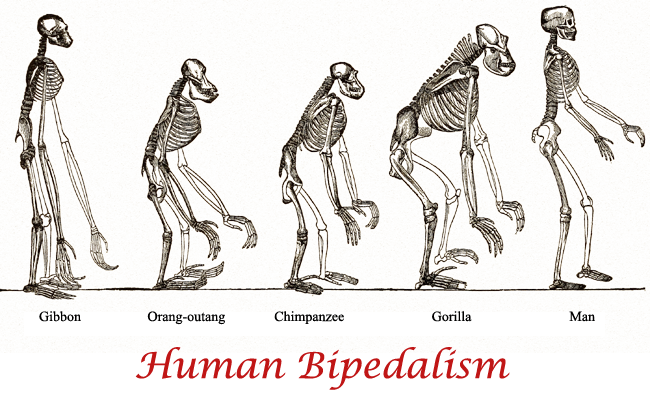
The order primates possesses some degree of bipedal ability
Many stand upright without supporting their body weight by their arms, and some, especially the apes, actually walk upright for short periods The view that the possession of uprightness is a solely human attribute is untenable They make only occasional use of bipedalism, often in the context of display Bipedal walking is the normal slow gait of birds, and running is the fast terrestrial gait of many of them
There seems to be a tendency for birds that spend a lot of their time in trees to use hopping as their fast gait, and for other birds to run. In this way, bipedalism may have nudged human evolution toward intelligence and community The brain takes the baton while bipedalism began the transformation, it was the brain that carried it forward Around 2.5 million years ago, the fossil record shows a marked increase in brain size, particularly in species like homo habilis and homo erectus.
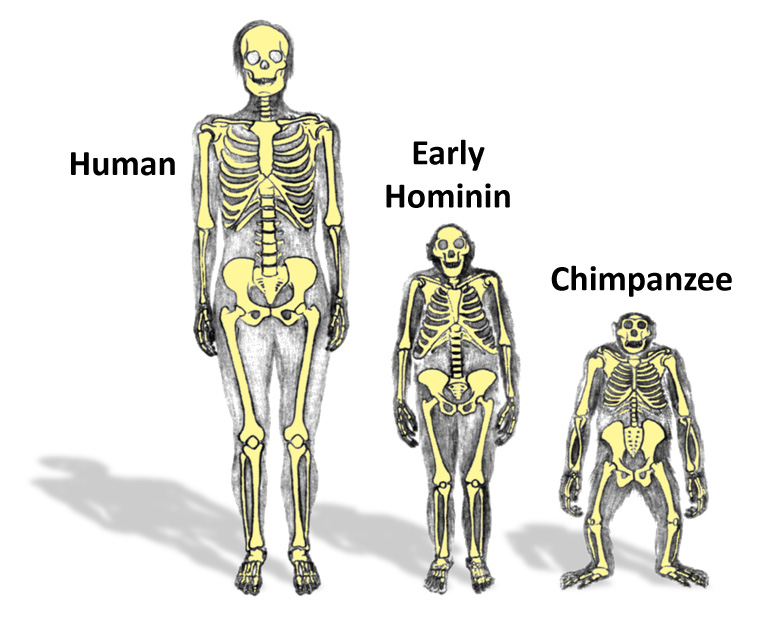
Our bipedal body structure is unique amongst living apes
In fact, our ancestors started on the path to becoming human when they began walking on two legs. Capellini believes the new study should prompt scientists to rethink some basic assumptions about human evolution. Humans are the only bipedal primates This shift in behavior also seems to have taken place rapidly, at the very start of our history since even the oldest human fossils exhibit a significant modification in posture

