Asexual Methods Of Reproduction Types Examples And Advantages
Activate Now asexual methods of reproduction exclusive media consumption. Subscription-free on our entertainment portal. Submerge yourself in a treasure trove of themed playlists demonstrated in superb video, designed for prime watching lovers. With hot new media, you’ll always get the latest. Find asexual methods of reproduction selected streaming in high-fidelity visuals for a mind-blowing spectacle. Enter our creator circle today to experience special deluxe content with absolutely no charges, no need to subscribe. Get fresh content often and delve into an ocean of rare creative works engineered for first-class media junkies. Be certain to experience exclusive clips—download immediately! See the very best from asexual methods of reproduction bespoke user media with lifelike detail and editor's choices.
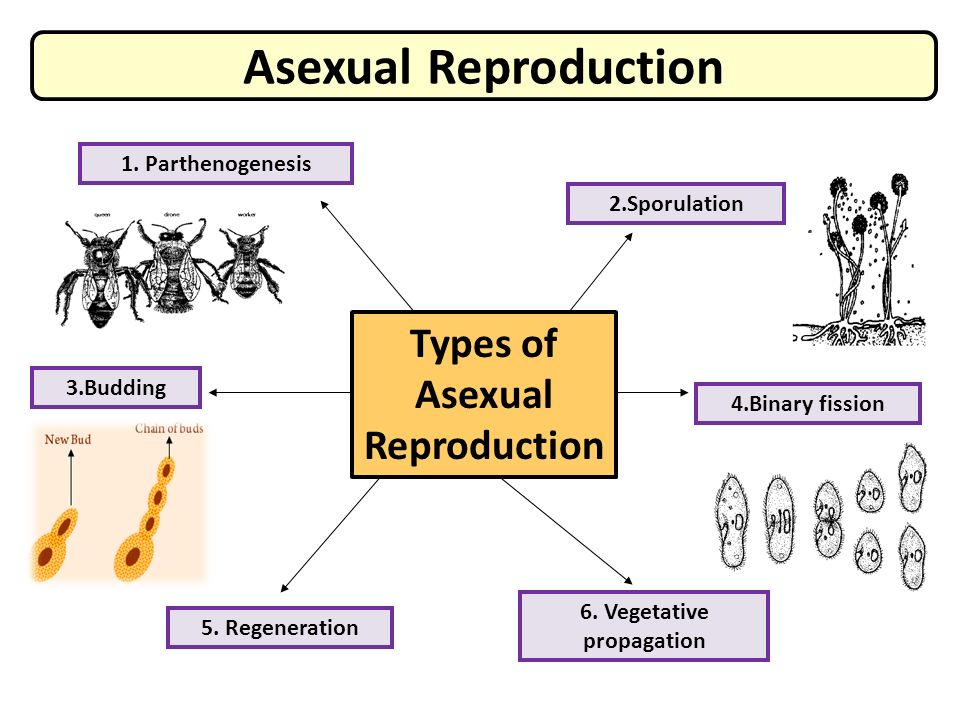
Diverse strategies of asexual reproduction organisms employ various methods to reproduce asexually, each adapted to different life forms and environments Asexual reproduction can take place by natural or artificial (assisted by humans) means. These strategies range from simple cell division in microorganisms to complex vegetative growth in plants and specialized egg development in some animals
What Are The Three Types Of A Asexual Reproduction at Sabrina Brown blog
A brief look at five types of asexual reproduction Since the new plant is arising from an adult plant or plant parts, it will also be sturdier than a seedling Binary fission, budding, parthenogenesis, spores, and fragmentation.
Asexual reproduction is a mode of reproduction in which a new offspring is produced by a single parent
The new individuals produced are genetically and physically identical to each other, i.e., they are the clones of their parents Asexual reproduction is observed in both multicellular and unicellular organisms This process does not involve any kind of gamete fusion and there won't be any. The different types of asexual reproduction are binary fission, budding, vegetative propagation, spore formation (sporogenesis), fragmentation, parthenogenesis, and apomixis
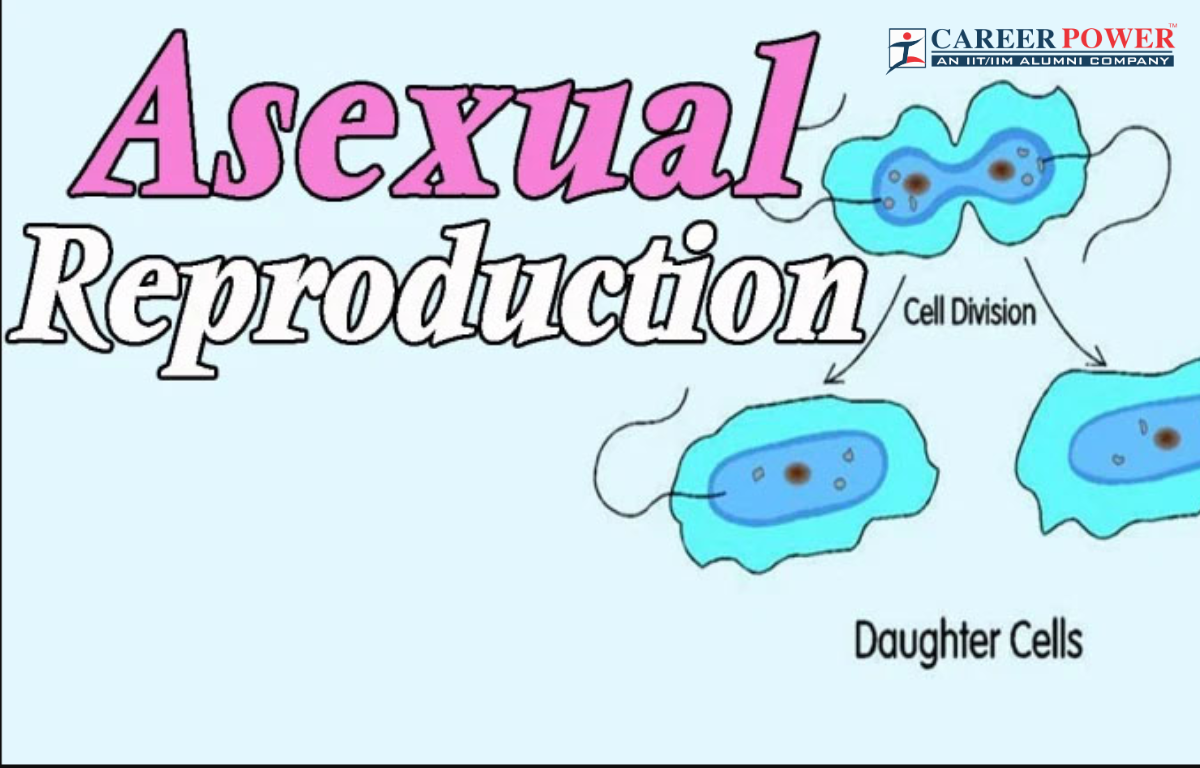
The organisms that reproduce through asexual means are bacteria, archaea, many plants, fungi, and certain animals. Asexual reproduction encompasses several types, each with unique mechanisms allowing organisms to produce offspring without genetic exchange or fertilization Below are the primary types of asexual reproduction, structured to highlight their distinct processes and examples. Types of asexual reproduction with examples binary fission the first type of asexual reproduction is binary fission, where an organism splits or divides in such a plane, producing two identical microorganisms
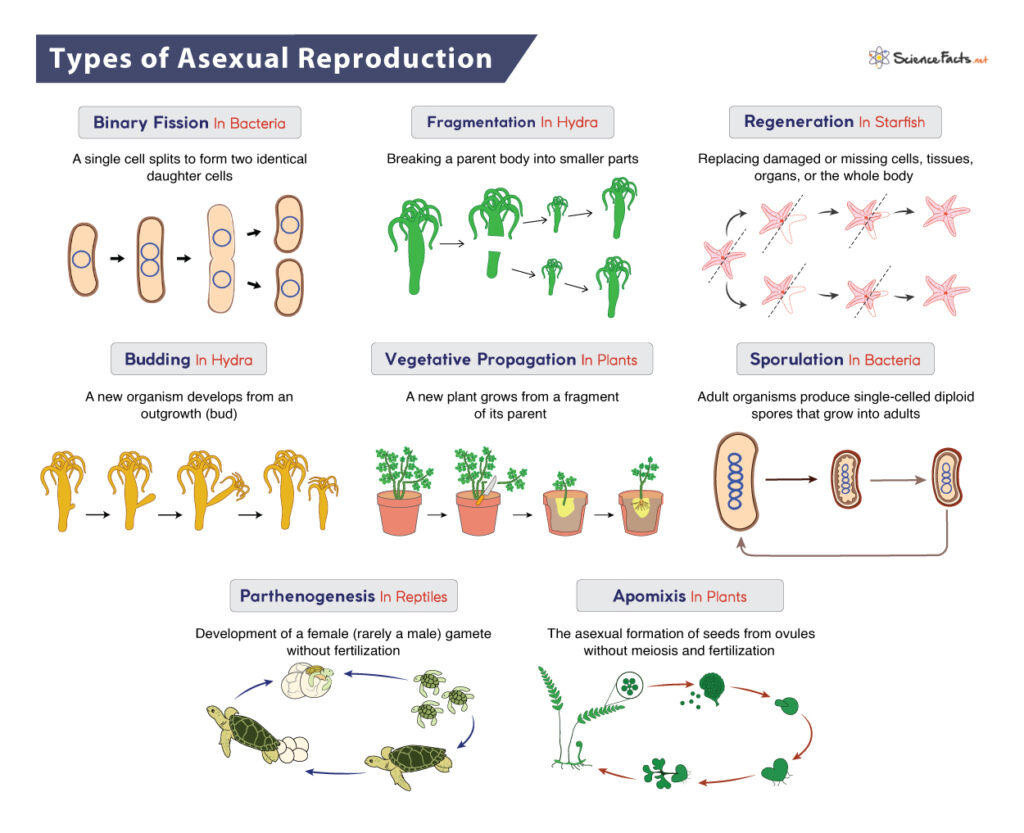
It mainly occurs in protozoans like amoeba, paramecium, vorticella, and euglena and lowers metazoans like coelenterates, turbellarians, and annelids.
Asexual reproduction is the type of reproduction where offspring are produced without the fusion of male and female gametes. Asexual reproduction can be defined as the process by which offspring are produced from a single parent rather than through fertilization It is most common in environments that favor rapid population growth over genetic diversity, as the offspring inherits its genetic traits completely from one parent The methods of asexual reproduction vary greatly among different types of species.
Explore asexual reproduction in plants, fungi, animals & more Learn types like fission, budding, regeneration, and vegetative propagation with examples & benefits. This method of reproduction is known as apomixis An advantage of asexual reproduction is that the resulting plant will reach maturity faster