What Will Happen To The Offspring Of Asexual Reproduction Parnogenesis Can Animals Produce Without Mating?
Go Premium For Free what will happen to the offspring of asexual reproduction VIP digital media. No subscription costs on our digital playhouse. Immerse yourself in a immense catalog of documentaries on offer in Ultra-HD, optimal for select watching junkies. With content updated daily, you’ll always get the latest. Locate what will happen to the offspring of asexual reproduction personalized streaming in ultra-HD clarity for a truly captivating experience. Join our digital hub today to enjoy unique top-tier videos with cost-free, access without subscription. Benefit from continuous additions and uncover a galaxy of special maker videos made for premium media junkies. Don’t miss out on original media—download quickly! See the very best from what will happen to the offspring of asexual reproduction uncommon filmmaker media with breathtaking visuals and chosen favorites.
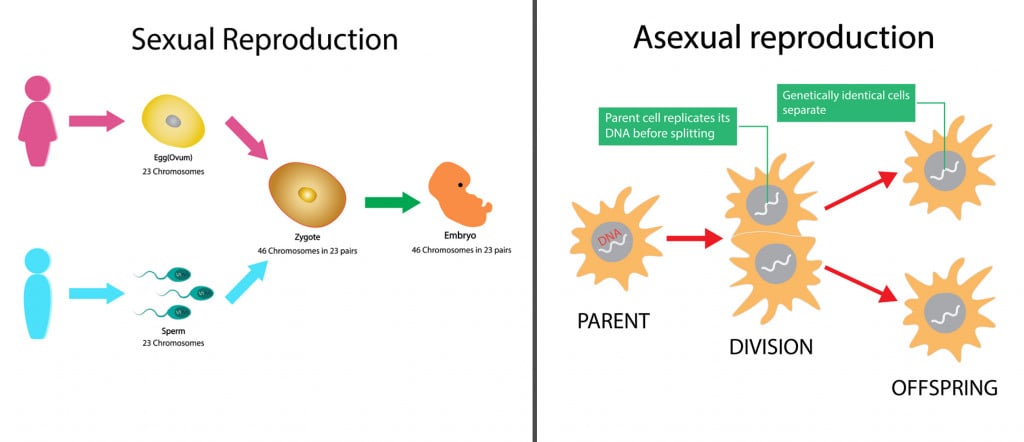
A single individual can produce offspring asexually and large numbers of offspring can be produced quickly Sexual reproduction promotes genetic diversity, which is essential for evolution through natural selection. In a stable or predictable environment, asexual reproduction is an effective means of reproduction because all the offspring will be adapted to that environment.
What’s the difference in these two forms of reproduction? - ppt download
Asexual reproduction living things use lots of different strategies for producing offspring, but most strategies fall neatly into the categories of either sexual or asexual reproduction Sexual reproduction combines genes from two parents, ensuring diverse and unique offspring Asexual reproduction generates offspring that are genetically identical to a single parent.
In national 4 biology learn how bacteria and plants reproduce asexually and how sexual reproduction in plants and animals introduces variation.
Asexual reproduction definition what is asexual reproduction Asexual reproduction is a type of reproduction that does not entail the union of sex cells or gametes Unlike in sexual reproduction wherein male and female gametes unite to reproduce offspring, in asexual reproduction, this union is not necessary The organism can reproduce in the absence of a mate which, in this case, produces.
Reproduction is a fundamental process ensuring the continuation of life Organisms have developed numerous ways to create new individuals, allowing life forms to adapt and thrive in various environments The core concept of asexual reproduction asexual reproduction involves a single parent organism producing offspring This process does not require the fusion of gametes, such as sperm and egg.

Animals produce offspring through asexual and/or sexual reproduction
Both methods have advantages and disadvantages Asexual reproduction produces offspring that are genetically identical to the parent because the offspring are all clones of the original parent Asexual reproduction is a mode of reproduction in which a new offspring is produced by a single parent The new individuals produced are genetically and physically identical to each other, i.e., they are the clones of their parents
Asexual reproduction is observed in both multicellular and unicellular organisms This process does not involve any kind of gamete fusion and there won't be any. During asexual reproduction, a single parent produces offspring The offspring have the same genes, and therefore the same inherited traits, as the parent

During sexual reproduction, two parents produce offspring
The offspring have a mix of genes from both parents As a result, offspring have a different set of traits compared to either parent. Reproduction without sex (asexual reproduction) learning objectives know which domains have asexual reproduction and how asexual reproduction occurs by binary fission of cells Know and provide biological examples of the types of asexual reproduction
Binary fission, budding, fragmentation, and parthenogenesis. Asexual reproduction creates identical offspring from one parent, with diversity mainly from mutations