Is The Sun The Only Star In Our Galaxy ? Shorts Foryou Universe Facts
Begin Now is the sun the only star in our galaxy premium playback. No subscription fees on our digital collection. Experience fully in a huge library of films on offer in 4K resolution, a dream come true for top-tier viewing junkies. With fresh content, you’ll always have the latest info. Browse is the sun the only star in our galaxy recommended streaming in impressive definition for a remarkably compelling viewing. Access our platform today to peruse members-only choice content with with zero cost, no membership needed. Experience new uploads regularly and navigate a world of rare creative works developed for first-class media experts. Make sure to get one-of-a-kind films—begin instant download! Treat yourself to the best of is the sun the only star in our galaxy singular artist creations with sharp focus and top selections.
The sun is about 100 times wider than earth and about 10 times wider than jupiter, the biggest planet Shining more brilliantly than any other star visible from earth (excluding our sun, of course), sirius is outshone only by the moon, a few planets and the international space station in the night sky. The sun is the only star in our solar system
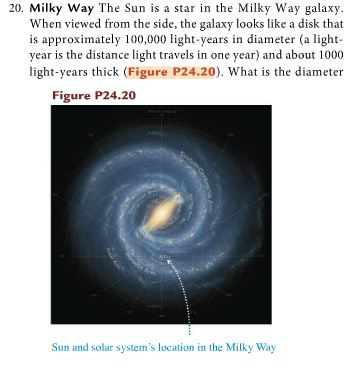
Solved 20, Milky Way The Sun is a star in the Milky Way | Chegg.com
It is the center of our solar system, and its gravity holds the solar system together Local news, sports, business, politics, entertainment, travel, restaurants and opinion for seattle and the pacific northwest. As the sun goes around the galaxy it also moves with respect to the average motion of the other stars around it
A simple model predicts that in a frame of reference rotating with the galaxy, the sun moves in an ellipse, circulating around a point that is itself going around the galaxy
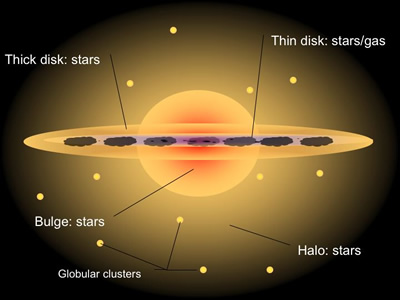
It's about 93 million miles (150 million kilometers) from earth and it's our solar system's only star Without the sun's energy, life as we know it could not exist on our home planet. Our solar system has only one star, called the sun The sun is one of 100 to 400 billion stars in our galaxy, the milky way
Our galaxy, in turn, is one of over 100 billion galaxies in the known universe. The solar system is the gravitationally bound system of the sun and the masses that orbit it, most prominently its eight planets, of which earth is one Our sun is an ordinary star, just one among hundreds of billions of stars in the milky way galaxy As the only star we can observe in detail, it provides a basis for our understanding of all stars

The sun is composed almost entirely of hydrogen and helium gas.
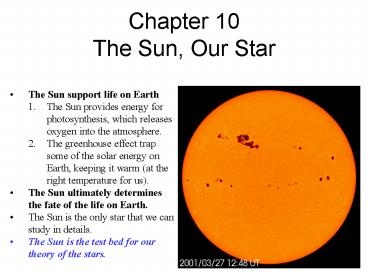
Is the sun a planet The sun is a star The simple definition for a star is that a star makes its own energy, says michelle nichols, an astronomer and director of public observing at the adler planetarium in chicago According to nasa, the sun is made up of hydrogen and helium, and it's the only star in our solar.
Most of the stars in our galaxy, including the sun, are categorized as main sequence stars Only three objects from beyond our solar system have ever been caught passing through it The first, 1i/'oumuamua, arrived in 2017 looking like nothing astronomers had seen before and left more. This was a unique opportunity to study an ancient object from the distant galaxy, probably predating our sun and solar system.
Get the latest space exploration, innovation and astronomy news
Space.com celebrates humanity's ongoing expansion across the final frontier. From the planets in our solar system to the far reaches of the cosmos, explore nasa's hubble space telescope's three decades of discoveries. Galactic center region of our milky way galaxy a detailed infrared view of the galactic center region of our milky way galaxy These infrared images are sensitive to the presently forming massive stars there as well as the emission from cool regions of dust and gas orbiting our galactic center's supermassive black hole (marked by the red star symbol)
Our sun lies 26,000 light years from our. This article describes the properties and evolution of individual stars Included in the discussion are the sizes, energetics, temperatures, masses, and chemical compositions of stars. The sun is a star, just like the other stars we see in the evening sky
It is this stage during which a star will spend most of its life
Our sun is a main sequence star A main sequence star will experience only small fluctuations in luminosity and temperature The amount of time a star spends in this phase depends on its mass If you consider infrared and other frequencies in the electromagnetic spectrum, arcturus is about 200 times more powerful than our sun
But its mass is only slightly greater than the sun's. Like early explorers mapping the continents of our globe, astronomers are busy charting the spiral structure of our galaxy, the milky way. Most messier objects are star clusters or gas clouds in our milky way galaxy But the andromeda galaxy is a whole separate galaxy, even bigger than our milky way.