Velocity Includes Only Direction Speed And Direction Only Speed Chapter 2 Motion In One Dimension Pptx Balanced Pptx
Claim Your Access velocity includes only direction speed and direction only speed curated content delivery. No wallet needed on our viewing hub. Lose yourself in a huge library of videos made available in premium quality, excellent for select watching connoisseurs. With just-released media, you’ll always keep abreast of. Browse velocity includes only direction speed and direction only speed organized streaming in stunning resolution for a truly captivating experience. Become a patron of our platform today to check out exclusive premium content with no charges involved, access without subscription. Get access to new content all the time and dive into a realm of one-of-a-kind creator videos built for first-class media buffs. Make sure to get never-before-seen footage—download fast now! Discover the top selections of velocity includes only direction speed and direction only speed singular artist creations with rich colors and special choices.
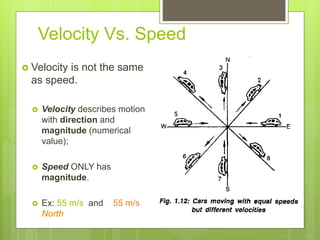
Velocity is the rate of change of displacement — a vector quantity that includes both speed and direction When using an arrow to represent velocity, the length of the arrow stands for speed, and the way the arrow points indicates the direction. Two cars both moving at 60 km/h but in opposite directions have the same speed but opposite velocities.
Velocity
Speed, being a scalar quantity, is the rate at which an object covers distance Vectors are often represented by arrows The average speed is the distance (a scalar quantity) per time ratio
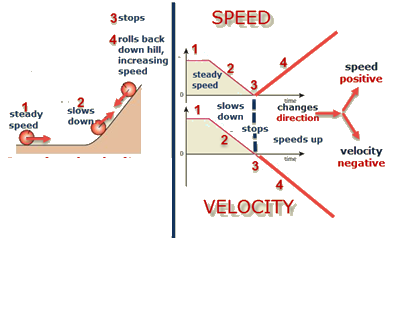
Speed is ignorant of direction
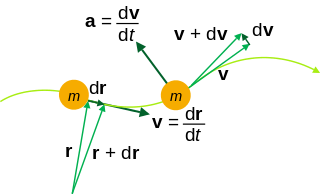
On the other hand, velocity is a vector quantity The average velocity is the displacement (a vector quantity) per time ratio. The main idea speed (v) and velocity (v → or v) are similar concepts, and as a result, the terms are often confused and interchanged incorrectly in everyday conversation The key difference between them is that velocity is a vector quantity that describes both how fast and in which direction an object is moving, while speed is a scalar quantity that describes only how fast an object is.
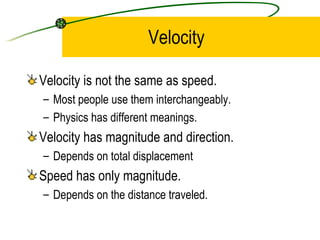
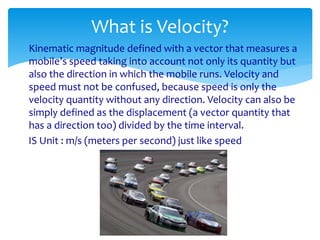
Velocity differs from speed in that velocity includes both the speed and direction of an object's motion, making it a vector quantity Speed, on the other hand, is a scalar quantity, representing only the magnitude of motion, without any direction Both can be measured in the same units, such as km/s or mph. Velocity, like speed, has si units of meters per second (m/s), but because it is a vector, you must also include a direction

Furthermore, the variable v for velocity is bold because it is a vector, which is in contrast to the variable v for speed which is italicized because it is a scalar quantity.
Velocity is a measurement of speed in a certain direction of motion It is a fundamental concept in kinematics, the branch of classical mechanics that describes the motion of physical objects. Speed is a scalar quantity, as it has only magnitude, while velocity is a vector quantity, as it includes both magnitude and direction In simpler terms, speed tells us how fast, while velocity tells us how fast and in which direction.
When describing the motion of objects in terms of distance, time, and direction, physicists use the basic quantities of speed and velocity. Learn about velocity in a simple way Discover how speed and direction work together, with examples, interactive quizzes, and fun facts for students. The fact that velocity is a vector is pretty important
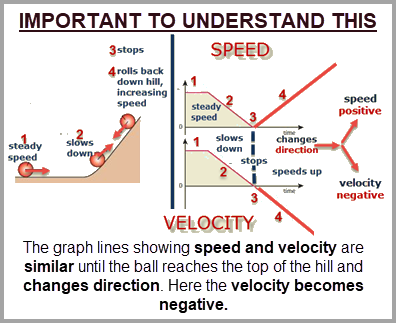
Traveling at 60 mph due east is not at all the same thing as traveling 60 mph due north
For this reason, in physics we make a distinction between the words velocity and speed Velocity is a vector (how fast you're going, and in which direction). Speed and velocity differ in that speed is a scalar quantity indicating how fast an object is moving, while velocity is a vector quantity that includes both speed and direction. The velocity of a moving object includes its direction and speed
Velocity is a vector quantity that describes both the object's speed (magnitude of velocity) and its direction of motion. Velocity is a vector, which basically means that it has a direction So if one car is going north at 30 m/s and another is going south at 30 m/s, they have the same speed, but they have different velocities There are some physical quantities, such as kinetic energy, that depend only on the speed, but others such as momentum depend on the velocity.

Speed is scalar quantity i.e., it has only magnitude whereas velocity is vector quantity i.e., it has both magnitude and direction
Speed is the change in distance with respect to time and velocity is the change in displacement with respect to time. Velocity is a vector quantity that includes both magnitude and direction, while speed is a scalar quantity that only has magnitude The key difference is that speed does not indicate direction, making it less informative than velocity. Speed is a scalar quantity that refers to how fast an object is moving. it does not include any information about the direction of the object
On the other hand, velocity is a vector quantity that includes both the speed and the direction of the object's motion So, while speed only tells you the magnitude of the motion, velocity gives you both the magnitude and the direction. This table provides a clear overview of the distinctions between speed and velocity In summary, while speed is a scalar quantity representing only the magnitude of motion, velocity is a vector quantity that includes both the magnitude and direction of motion.
A participant questions the idea that speed can exist without direction, using the example of an object moving in the y direction at 5 m/s to challenge the notion that speed can be directionless.
The measure of both speed and direction is called velocity A vector is measurement that includes both size and direction