Umbilical Cord Only 2 Vessels And Remnants Embryology Medbullets Step 1
Play Now umbilical cord only 2 vessels pro-level content delivery. Complimentary access on our media hub. Immerse yourself in a comprehensive repository of themed playlists brought to you in cinema-grade picture, tailor-made for exclusive watching fans. With just-released media, you’ll always keep abreast of. pinpoint umbilical cord only 2 vessels recommended streaming in ultra-HD clarity for a truly captivating experience. Get into our platform today to see members-only choice content with with zero cost, no sign-up needed. Get fresh content often and discover a universe of singular artist creations intended for top-tier media connoisseurs. You have to watch hard-to-find content—click for instant download! Enjoy the finest of umbilical cord only 2 vessels one-of-a-kind creator videos with breathtaking visuals and selections.
A single umbilical artery happens when the umbilical cord has only one artery instead of two In that case, it's called a single umbilical artery Learn how this may affect the fetus.
Umbilical Artery Vein Stock Illustrations – 28 Umbilical Artery Vein
But in some cases, the umbilical cord contains only two blood vessels — one vein and one artery But sometimes the cord has one vein and just one artery In the journey of pregnancy, the umbilical cord is like a bridge connecting a mom and her growing baby
Usually having two arteries and one vein, it's a lifeline for sharing important stuff like nutrients and oxygen
In this article, we're going to unravel the. The umbilical vein has a larger diameter and is located deeper than the arteries A single umbilical artery occurs in approximately 1% of pregnancies, where the cord contains only two blood vessels It is more frequently found in multiple pregnancies compared to singleton pregnancies.
Your baby is most likely fine Usually, an umbilical cord has two arteries, along with a single vein The umbilical vein carries oxygen and nutrients to your baby and the arteries remove waste products Although your baby has only one artery, called a single umbilical artery (sua), it shouldn't affect his health.

Usually, an umbilical cord has two arteries
But what if an ultrasoundscan finds that there's only one artery Occasionally, during pregnancy, there is a single umbilical artery (sua) present in the umbilical cord, as opposed to the usual two Approximately, this affects between 1 in 100 and 1 in 500 pregnancies, making it the most common umbilical abnormality. In placental mammals, the umbilical cord (also called the navel string, [1] birth cord or funiculus umbilicalis) is a conduit between the developing embryo or fetus and the placenta
During prenatal development, the umbilical cord is physiologically and genetically part of the fetus and (in humans) normally contains two arteries (the umbilical arteries) and one vein (the umbilical vein. Introduction the umbilical cord typically contains two arteries and one vein Single umbilical artery (sua) refers to a variation of umbilical cord anatomy in which there is only one umbilical artery It may be an isolated finding or associated with aneuploidy or other congenital anomalies.
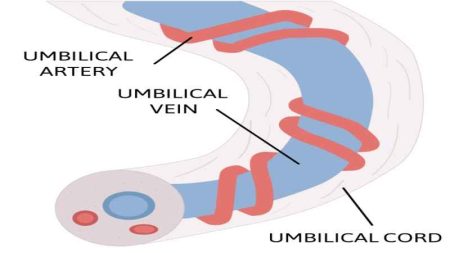
The umbilical cord vein provides oxygen and nutrients from your blood directly to the fetal blood
The two arteries remove waste products from the fetal circulation. The umbilical cord is attached to your placenta on one end and your baby's belly on the other Symptoms and causes what are the symptoms of an umbilical hernia Umbilical hernia symptoms are similar in adults and children
The most common sign is a visible bulge on or near your belly button that's soft to the touch For some people, the bulge is always visible In other cases, you can only see the bulge when there's pressure on your. Umbilical cord occlusion as a mucous connective tissue, it is rich in proteoglycans, and protects and insulates umbilical blood vessels

[2] wharton's jelly, when exposed to temperature changes, collapses structures within the umbilical cord and thus provides a physiological clamping of the cord, typically three minutes after birth.
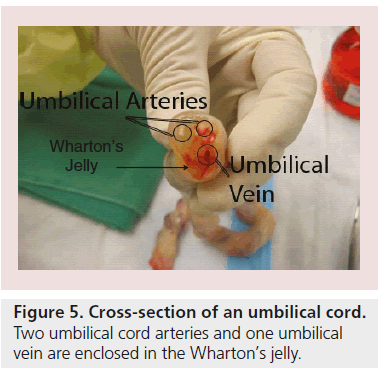
The umbilical cord is a tube made up of two arteries and one vein, which is covered in a thick substance known as 'wharton's jelly' It forms when you're around five weeks pregnant and it serves as a lifeline to your baby It transports nutrients and oxygen from you to your baby and passes back waste from the baby via the placenta. Mount sinai health system offers patients the full range of clinical care specialties and treatments, as well as a vast network of facilities.
[14] the umbilical cord inserts into the chorionic plate (has an eccentric attachment). Various compartments of umbilical cord from which mesenchymal stem cells can be isolated Uc prevents umbilical vessels from compression, torsion and bending, while providing good blood circulation Mcelreavey et al [4] for the first time reported isolation of fibroblast.
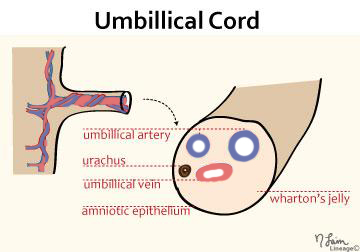
As the fetus develops, the cord lengthens to allow for fetal movement while some structures like the ductus omphaloentericus and umbilical vesicle degrade
The normal cord is about 55cm long and contains two umbilical arteries and one vein. The umbilical cord, composed of blood vessels and connective tissue, connects the fetus to the placenta during pregnancy The prevalence of umbilical cord abnormalities is higher for twin pregnancies compared with singleton pregnancies Some of these abnormalities are nonspecific to twinning and can also be found in singleton gestations (such as velamentous cord insertion, vasa previa, and single umbilical artery).
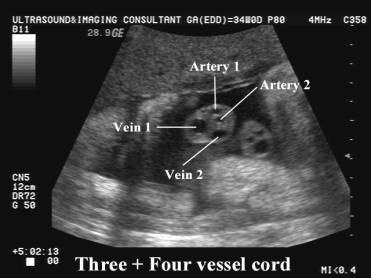
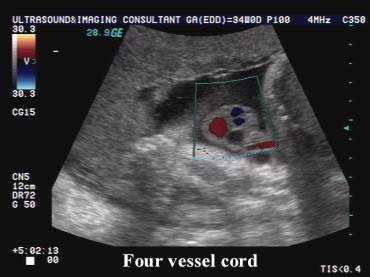
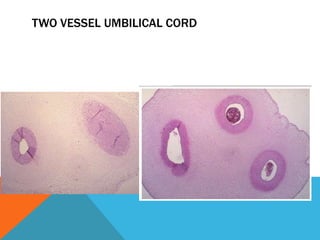
The arteries carry deoxygenated blood and waste products away from your baby to the placenta Sometimes, there is only one artery in the umbilical cord, instead of the usual two You may hear this referred to as a 'two vessel cord' or 'single umbilical artery' This occurs in approximately 1 in 100 pregnancies.

Learning about a single umbilical artery what is it
The umbilical cord connects your baby to your placenta In most babies, the cord has three blood vessels There's one vein and two arteries